The Sophomore Slump


Near the end of September and the start of October, I was hit by the Sophomore Slump, a funky feeling of melancholia that often plagues, as its name suggests, second-year students. A sophomore may fall victim to the Slump for various reasons; for me, I would say that the main reason behind my “Slump attack” was the shift in atmosphere from freshman year to sophomore year. As a frosh — which is Princeton’s term for “freshman” — you are really catered to, and everything is wonderfully unfamiliar; this is not to say that life as a sophomore is isolating and not exciting, nor to say that I expected sophomore year to be identical to freshman year, but the vibes of sophomore year are undoubtedly distinctive. Wrestling with this change in vibes ultimately brought on the Slump. However, since returning from Fall Break, I am grateful to say that the Slump has gradually evaporated, and I know this is mainly thanks to experiences shared with friends and my faith.


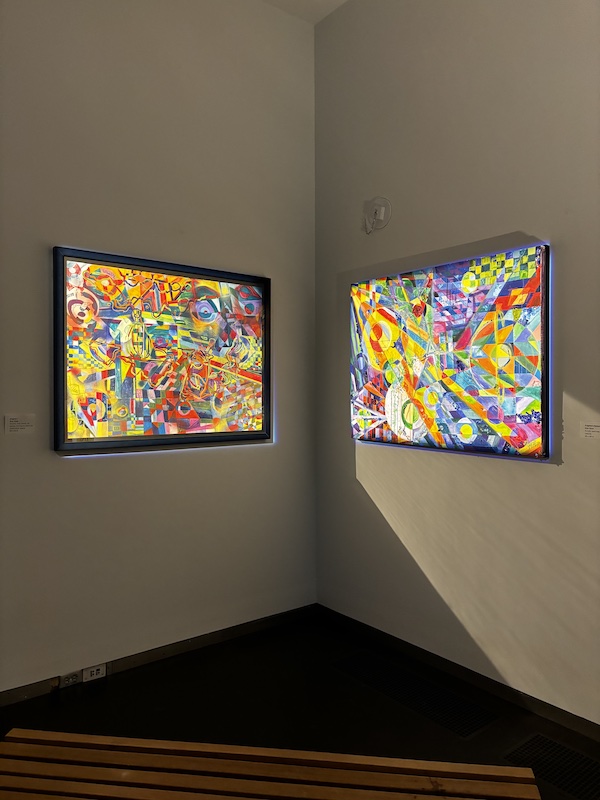
Within these past two or so weeks of post-Fall-Break, I have attended a variety of events with friends, which has really helped disentangle the “Slump state” of my mind by reminding me of all the little things for which I am very thankful. On Saturday, October 25th, one of my friends and I went to the Princeton vs. Harvard homecoming football game. Although Princeton did not win, we still had a really good time cheering on the Tigers in a bundled-up sea of orange and black. Later that same day, the two of us, along with another friend, visited the brand new art museum, as all University undergraduates and graduate students were invited to preview the museum prior to its grand 24-hour opening on October 31st. The museum is SPECTACULAR; I will definitely have to do some more exploration! Additionally, every Thursday, I meet with my Christian Union Nova, or CU Nova, Bible study group. Our group consists of only sophomore guys, and our weekly meetings are always so encouraging. Such events, from a football game to a museum preview to Bible studies, have tremendously assisted in bringing me out of the shadow of the “Slump cloud,” reawakening me to all the blessings that surround me at Princeton, from fun-filled fruitful events to friendship. Anytime this cloud tries to overshadow me, I can always remind myself of the sunshine that streams from these blessings. 

Image
Screenshot 2025-11-06 at 6.14.14 PM.png
The Princeton vs. Harvard homecoming football game! (photo courtesy Ammaar Alam from The Daily Princetonian)
Image
Screenshot 2025-11-06 at 6.13.42 PM.png
Claude Monet's beautiful Water Lilies and Japanese Bridge on display at the University art museum — I love some Monet / Impressionism! (photo courtesy Emma Cinocca from The Daily Princetonian)

Nonetheless, the primary reason my Slump season has slowly come to an end, with sunshine radiantly seeping through, is because of the Lord, from Whom all blessings flow. When I was in the thick of the Slump, I pondered the notion that everyone else had everything solidified, from their friend groups to their extracurriculars to their academic / career paths, and I was this “rare exception” who did not, essentially falling into the comparison trap and throwing myself a pity party. However, I know this notion is anything but the Truth. Psalm 139:16 tells me that the Lord ordained every single day of my life before I was even born; likewise, Ephesians 2:10 states that He prepared good works in advance for me to do. So, who am I to pitifully compare myself to others and believe the lie that the Lord is not working out and revealing his plan for each little facet of my life? When things seem discombobulated, the Lord still has a plan; when things seem straight and orderly, the Lord still has a plan — Proverbs 16:9 actually informs us that though we may make plans for ourselves, the Lord is Who directs our course. We just have to be patient and hold fast to that which is true, fully submitting ourselves to Him to enable His perfect plan to unfold. 


I am grateful to be overcoming the Sophomore Slump! Sophomore year may pose its own unique set of challenges, especially when compared to freshman year, but through these challenges, the seeds of important elements of life, like gratitude and Truth, can take root and grow. Whether you are a sophomore in high school, a sophomore in college, or simply feel like you are going through a funky time in life, try to practice having a mindset of thanksgiving and Truthfulness — such a mindset goes a long way; a period of slump can just be a prelude to a period of soaring.


*If you want to read another take on the Slump, please take a look at Lake’s amazing blog "Sophomore Slumping" — it is so good! Also, if you have any specific questions about Princeton or would simply like to learn more about the University, please never hesitate to reach out to me or any of my fellow bloggers. My email is ds7460@princeton.edu. We love hearing from you all and helping out in any way we can; we are here for you guys!*


A Poem for Summertime


Oh, sweet summertime,

Gone so fast,

Mem’ries last. 


Woods of fireflies,

Sun has set.

Dark blue skies,

Crystalline net.


Bright beaming stars,

A dirt road.

Above cars,

Some secret code. 


Late evening walk,

Pines surround. 

A nice talk,

Barks from a hound.


Oh, sweet summertime,

Sour green lime.


Hopping in pools,

Bracing swim.

Sapphire jewels

Shine like a glim. 


Reading a book,

Page by page. 

A plot hook

Takes center stage. 


Passing peach trees,

Countless fields.

A cool breeze

Humid air shields.


Oh, sweet summertime,

Still wind chime.


Crepe myrtles glow,

Withers grass. 

A grand show,

Rabbit darts past. 


Drips of ice cream

On my hand,

Like a stream

Of grains of sand.


Gorgeous ocean,

Waves that thud. 

Slow motion,

Castles of mud. 


Oh, sweet summertime,

Paradigm.


A blowing fan,

Fire pavement.

Chills the tan,

One’s amazement.


A hot truck ride,

Hat on dash.

Road is wide,

Gas pedal mash.


A red sunburn,

One May day.

A slow turn,

Radiant ray. 


Oh, sweet summertime,

Sunlight prime.


Cardinal hides,

Little red. 

Quickly glides,

Feathered wings spread. 


Lone fawn appears

From the wood.

Sound she hears,

Not understood.


Butterfly wings

Dance on past.

Lovely things,

Small shadow cast. 


Impressive ant,

Moving so.

Stopping, can’t,

Places to go.


Oh, sweet summertime,

Lines of rhyme.


The Creator,

High above.

No greater

Is there a love.


He made all things,

Elation. 

To Him sings

All creation. 


Formed ev’ry land,

Sky and sea.

His right hand

E’er upholds me.


Oh, sweet summertime,

Can’t define.

How sublime!


“So No One Told You [Writing Seminar] Was Gonna Be This Way”: Growing Through the Infamous Frosh-Year Requirement


Entering Princeton, Writing Seminar, a frosh-year rite of passage commonly referred to as “Writing Sem.,” was one of my biggest fears. I had never heard any student, past or present, say they had fond memories from the seemingly notorious distribution requirement — some alumni even claimed Writing Sem. was the hardest class they took during their four years. Upon being notified of my placement into one of the fall semester cohorts of WRI 161: Friendship, I was, naturally, a little scared — but also a bit relieved because at least I did not have to wait until spring semester to encounter the disastrous storm. Although my expectations were flooded and formed by horror stories, Writing Seminar, out of all my first-year classes, turned out to be one of my favorites, teaching me skills I will unquestionably use for a lifetime.


Before sharing my Writing Seminar experience, I want to spell out some basics of the class. Every Writing Sem. has a distinctive topic — mine being Friendship, but others include CuriosityInterpreting Illness, and Educational Equities; consists of 12 frosh and one professor, whose area(s) of study largely align(s) with the Seminar’s topic; and meets twice a week for one semester, with each class lasting an hour and twenty minutes. There are four major “Assignments” — known as “A1,” “A2,” “A3,” and “A4” — completed throughout the semester, and nearly all follow the same order of steps: 1) Draft, 2) Workshops, and 3) Revision. The first step, Draft, is exactly what it sounds like: you write a draft responding to the prompt of the Assignment — “A2 draft,” for example. The second step, Workshops, is all about improving your draft. To do so, you and your entire class collectively read, analyze, and discuss the drafts of four randomly selected classmates (I know it sounds stressful, but it really is not; everybody has to have a draft “Workshopped” once and only once throughout the semester), and you meet with your professor to review your draft, either one-on-one or alongside another classmate. The last step, Revision, is the grand finale. Taking what you learned from Workshops and conversations with your peers and professor, you transform your draft into a revised final paper — this revised version is what is graded, not the draft. Structurally, Writing Seminar is a very small and straightforward class. 


New South, the building in which Friendship and many other Writing Seminars were held — also home to the Writing Center, a great resource for anything writing-related!


Only a few weeks into Friendship, all my not-so-great Writing Seminar preconceptions were disproved. I quickly realized my classmates were just like I was, trying to navigate all the novelties of college, and my professor wholeheartedly wanted us dozen of frosh to grow and do well. My classmates were not light-years ahead of me, and my professor was not an evil witch who preyed on student suffering. Rather, an unadulterated sense of care and support seemed to pervade every class, helping me feel surrounded by friends in Friendship. As classes progressed, my classmates and I kind of coalesced into this community of thinkers who sought to challenge current ideas and propose new ones. We examined affectionate works of art and heartfelt letters in nineteenth-century friendship albums in Special Collections; questioned the authenticity of a friendship between an A.I. chatbot and a human; debated the views of scholars, old and new; engaged in outside-of-class meetings with our professor; and, above all, embraced the power of our voices and the strength of good academic writing. Week by week, Friendship taught us to listen to and express all that our voices had to say, a skill necessary for both the academic world and the real world. 


One of the friendship albums we viewed (Louise A. Woods Friendship Album, 1855-1859, Special Collections) 


A beautiful watercolor drawing, inspired by Niagara Falls, by American artist George Catlin (Anicartha Miller Friendship Album, ca. 1827, Special Collections)


An anonymous aquatic drawing (Anicartha Miller Friendship Album, ca. 1827, Special Collections)


Our voices roared louder than ever as we dove into our fourth Assignment, or A4: The Final Research Paper. Each little aspect of the A4 revolves around youyou decide what you want to investigate, the sources you want to use, and the route you want to take; you are in the driver’s seat. For our A4, we were required to pick a friendship-related concept, representation, or object and then utilize that “con./rep./or obj.” to expound upon an aspect of friendship that puzzled us — that was all we were given, no sources or anything else. I will not go too in depth on the con./rep./or obj. and aspect I chose in case someone wants to choose the same con./rep./or obj. and/or aspect as I did, but I will vaguely say that the main focus of my A4 revolved around the impacts of smartphones on friendship. Finding various sources to support this theme was fun because at least I was exploring an issue in which I was interested, but no doubt strenuous. I scouted the endless shelves of Firestone to retrieve books, assiduously used Google Scholar to pluck high-quality academic articles and papers, and scoured YouTube for reputable videos and documentaries. In doing so, I felt like a scholar. I had formed my own hypothesis and searched for evidence to aid it; by meticulously inspecting my collected evidence, I converted my hypothesis into a cohesive paper. No one was telling me where to go or what to do; I steered the ship — but I always had a “map,” AKA my professor and peers, to turn to if I ever got off course. When I submitted all 13 pages of my revised A4, I was very proud — and also crazy relieved because I was officially done with Writing Sem.! My A4 embodied not only all the progress I had made throughout the semester but also an early chapter in my career of independent work at Princeton and beyond. 


Writing Seminar is a unique class. You are put into a room with 11 other frosh and a professor who is supposed to equip you with some of the most imperative tools for service through scholarship. You may absolutely despise your Writing Sem., you may totally relish it, or you may wind up somewhere in the middle. Writing Seminar is not a walk in the park, but I hope my personal experience may give you some hope. If there is anything Friendship taught me, aside from writing and research, it is that helping others, leaning into your voice, contributing as actively as possible, and doing your best are all keys to true growth. You can do it!


*If you want to learn more about Writing Sem., please take a look at Ava’s blog "Braving the Beast of First-Year Writing Seminar" — it is amazing!*


Lovin’ the Little Things


Summer is a busy season for many college students, from study abroad programs to internships to — in the case of Princeton — senior thesis research. During such a season, a little voice can flood students’ minds, irritatingly whispering, “You should be doing more. So-and-so is doing this-and-that; meanwhile, you’re doing such-and-such.” This voice is no stranger to me, but I have realized its powerlessness through emphasizing and enjoying simple blessings in my life, like those that spring from my church family, peach fields, and good books. 


In late June, I volunteered as a junior counselor for Beach Retreat, an annual youth trip my church holds, and doing so made me more appreciative of all the little things that go into making the trip as impactful and memorable as it is. My responsibilities as a junior counselor generally included helping facilitate small-group discussions, set up games, and lead a team. I got to see “behind the scenes” of everything, a side I do not think I ever truly contemplated before elevating up to junior counselor status. There is so much diligent planning that goes into making Beach Retreat what it is, especially in terms of gathering all the materials needed for instruction, game preparation, and meals. After experiencing such planning firsthand as a junior counselor, I see the trip through a better lens, one that does not solely focus on the big focal points but also the minute invaluable details. Without all the efforts and time poured into it, Beach Retreat would not emit the same degree of spiritual insight and influence as it currently does. 


Now, I want to transition to a topic that is a little more peachy than beachy… literally. Where I am from is surrounded by fields and fields of peach trees, and summer is when the sweet stone fruit reaches its ripest state — at Beach Retreat, we actually ate a delicious peach cobbler, a beloved Southern dessert you have to try! One evening a few weeks ago, my dad and I went on a long walk and passed acres and acres of trees bearing the delectable staple of my hometown. As we passed the trees, I thought about the significance they hold to me. I have never seen a peach tree at Princeton before, though I am sure there are some in the vicinity. So when I see the endless rows of peach trees that line my rural Southern town, I am reminded of my appreciation for the little things that make my home so special. Regardless of where I go, I know the peach trees will always be there to welcome me when I return! 


A close-up of all the peaches — summer is here!


Endless rows of pink peach trees blossoming in the spring


Aside from admiring the peach-adorned landscapes of my hometown, I have also gotten to appreciate some literary works recently. At the moment, I am reading This Side of Paradise by none other than Princeton attendee F. Scott Fitzgerald, which serves as my fourth book this summer. (Now, let me preface that I am not a huge reader. I like reading, but for me to finish a book completely, it has to really interest me. So far, the four I have undertaken have done just that!) The first two I read were Mostly What God Does by co-anchor of NBC News’s Today Savannah Guthrie and Goliath Must Fall by Pastor Louie Giglio. Guthrie’s vulnerable reflections on her faith journey and Giglio’s message of how Jesus has defeated the giants in our lives, drawing from the Biblical narrative of David and Goliath, were very heartening to my faith. The second duo I tackled, and am still working on, was definitely Fitzgerald-based: The Great Gatsby and This Side of Paradise. This year marked the 100th anniversary of The Great Gatsby, and This Side of Paradise is Fitzgerald’s first novel and largely based on his experiences at Princeton. I, consequently, felt compelled to read the acclaimed — and somewhat historical — novels, whose beautiful passages and Princeton roots did not disappoint! I am very thankful for the ways these four works have challenged and inspired me. 


I write these paragraphs about beaching, peaching, and literary reaching to motivate you to neither compare yourself to others nor discount the little things in life. Over the summer especially, it is easy to fall into the misconception that everybody is everywhere doing everything and you are not doing enough. When that falsehood attempts to take rent in your mind, take time to remind yourself of the things for which you are grateful, and endeavor to make the most of each day. For me — not trying to come across as pious but instead as honest — I try to carry out such through striving to glorify and honor God in all I think, say, and do. When your summer reaches a close, I hope you feel immense amounts of gratitude and satisfaction as you look back on weeks spent not stressing and comparing but rather delighting in the many simplicities of and living out life.


Trying New Things


The school year is officially coming to an end. Reading Period is underway, finals are approaching, and most importantly, summer is right around the corner. Although classes and lots of activities seem to be winding down, I have found that opportunities for me to try something new definitely have not! Over the past several weeks, just from trying new things, I have gained a better appreciation particularly for trivia, my residential college, and the arts at Princeton. 


One Wednesday near the beginning of April, I tagged along with a friend to PSEC, or Princeton Student Events Committee, Trivia Night at Frist Campus Center, and let me just say, we did not leave empty-handed. Upon arriving, we spontaneously ran into a few other friends and created a team with them. Our team name was the definition of intimidating: Tra La La. As each round passed, we “Tra La Laud” our way to victory, finishing in 3rd place overall. Such meant that we not only earned bragging rights but also got to select from a range of prizes, from a heated blanket to a box of cupcakes to an edible arrangement — I got a dope beach towel! PSEC Trivia Night was honestly so much fun, but the fun did not stop there. 
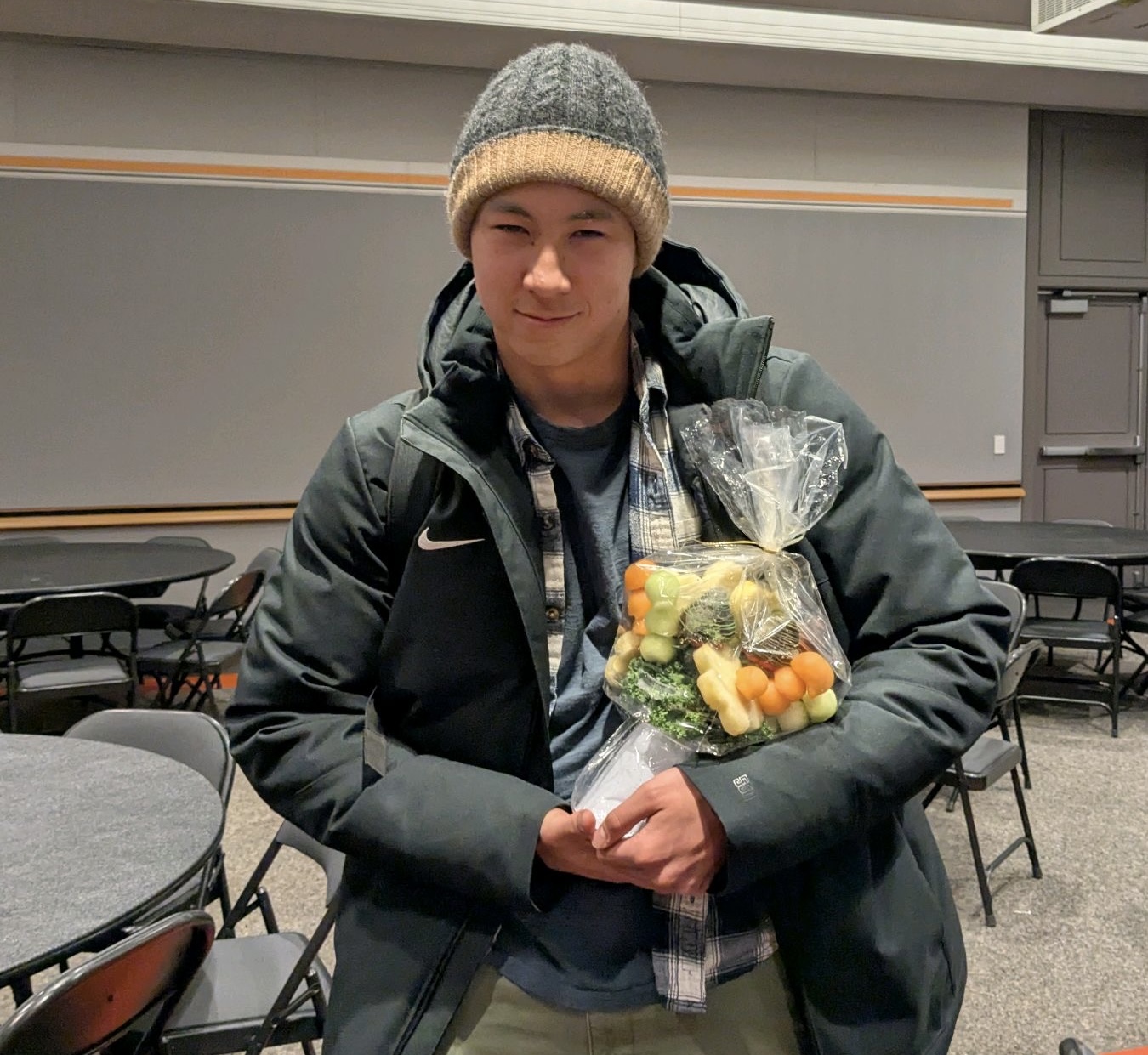
 

Student poses with Edible Arrangement
My friend, who is in my zee group, with his edible arrangement!


Every Wednesday at 9:30 p.m., Rocky College holds its own Trivia Night — all students are always welcome, regardless of whether they are affiliated with Rocky — and since PSEC Trivia finished just as Rocky Trivia was about to start, we victoriously made our way toward the Holder arches to keep the trivia fun going. Now, I do have to confess: I am a proud Rockyite, but I had never actually gone to Trivia Night before. I had always wanted to go but just never gotten around to going. Thus, I was grateful for the chance to finally try out a long-held weekly tradition of my residential college with some good friends.


After the first round, though, I quickly learned that PSEC Trivia Night was child’s play compared to Rocky Trivia Night. At Rocky Trivia, if a team gets more than three questions of each ten-or-so-question round correct, then they are doing really well. Nonetheless, that is what trivia nights are all about: you and your friends can be completely clueless together and still have a great time. At the end of Rocky Trivia, Tra La La was far from 3rd place, but nothing will ever stop the Tra-La-La trivia spirit! Besides, the winners of that night’s Rocky Trivia did not get a beach towel or an edible arrangement; so, I think we are the real winners here ;). 


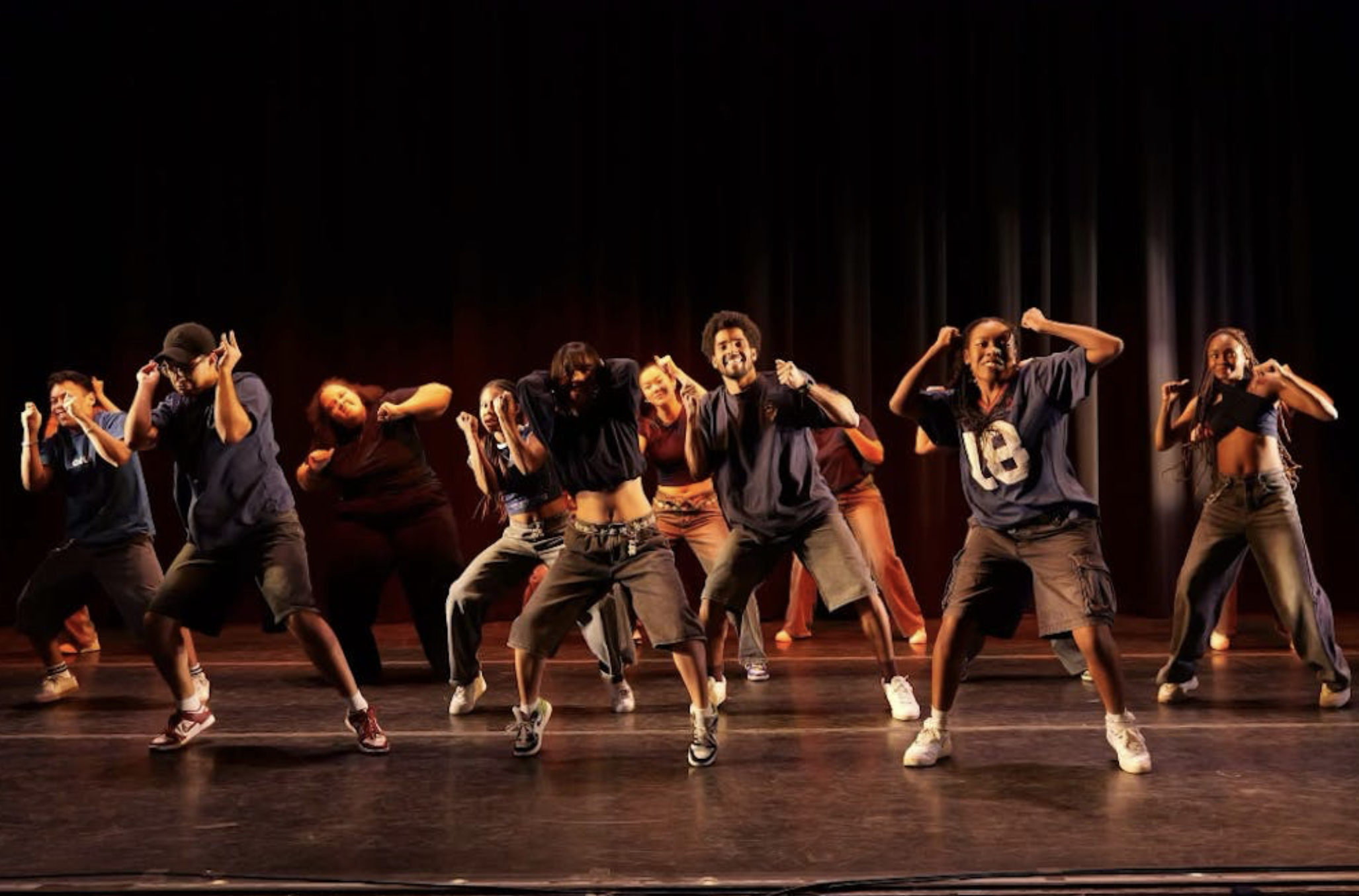
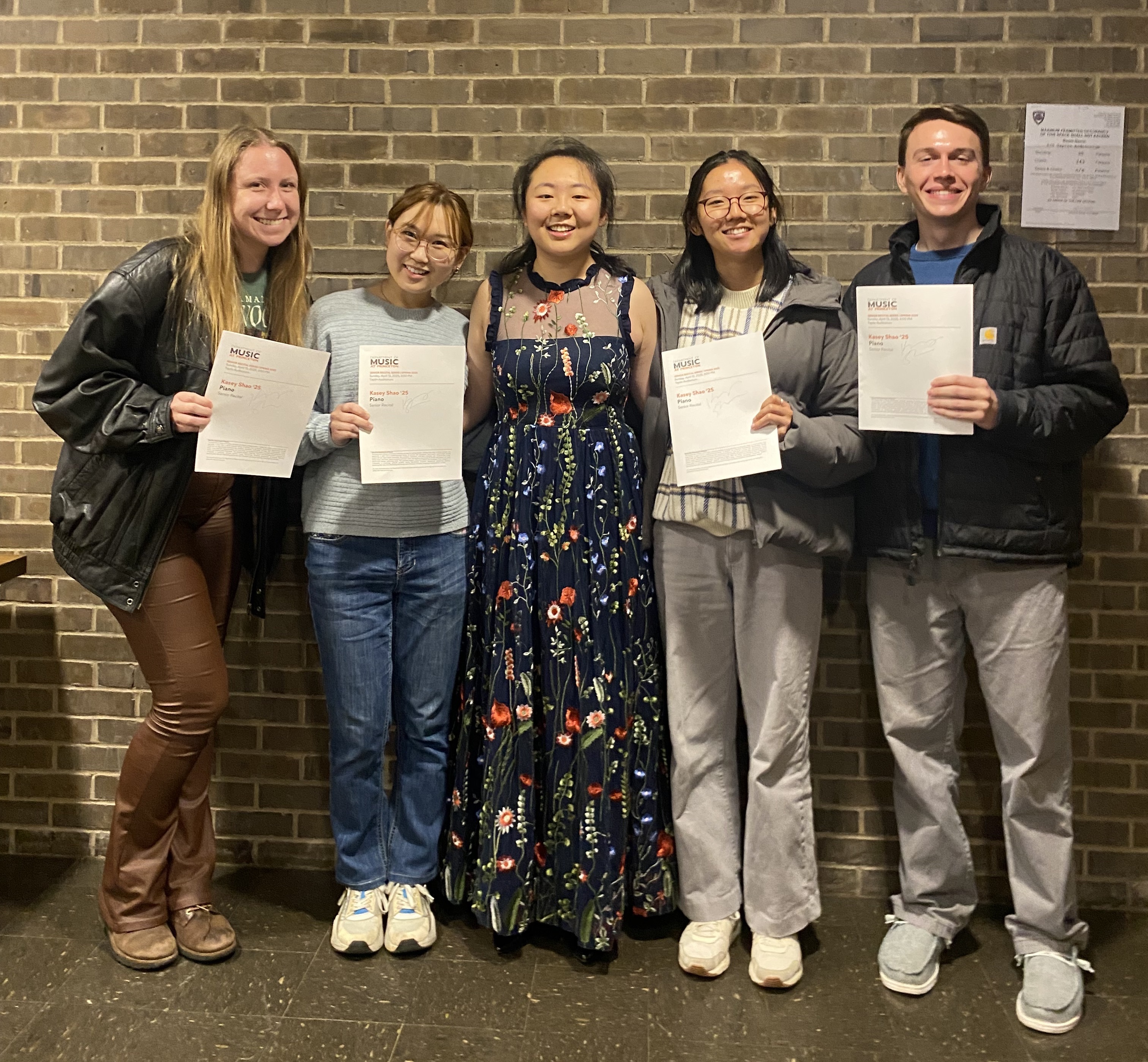
Nevertheless, I have not just become more appreciative of trivia and Rocky, but by attending various performing arts events, I have also gotten to celebrate the beauty of dance and music at Princeton. Before Princeton, I could probably count on one hand the number of dance shows I had been to, but over the past few weeks, as many campus dance groups have their annual or semester show in either March or April, I feel like I have danced the night away! I know many Princetonians who like to bust a move: my Residential College Adviser, or RCA, is the President of Más Flow (Latin dance), one of my closest friends is a part of the Black Arts Company (BAC, hip-hop), and a number of my Christian Union Nova peeps are members of Six14 (Christian/liturgical dance, contemporary to hip-hop). Throughout March and April, I went to performances for each of these groups, and they are all beyond talented — if you ever want to join a dance group, there are definitely plenty to choose from that will be glad to have you. Just like with dance shows, however, I could also count on one hand the number of musical performances I had seen before coming to Princeton. The other week, I went to the senior piano performance of my Peer Academic Adviser, or PAA, who is majoring in music. Saying that she is “good” is an extreme understatement. She has such a love for music, which radiated during her entire performance. I was simply blown away by all the events I went to, ultimately gaining a stronger appreciation for the performing arts in general, not just those at Princeton. 

 

Many dancers on stage holding up flags of their heritage
A piece from Más Flow's show "Barrio Mío," courtesy their YouTube channel. This picture is from the end of the piece, where each dancer held up the flag of the country he/she is from. This honestly gave me chills — it was such a cool celebration of the cultures and the beautiful diversity that make up Princeton.


Group of students pose amidst choreography
A photo from BAC's fall show titled "After Hours," courtesy Jessica Poon from The Daily Princetonian - The theme of their spring show was "Vengeance," but I also went to "After Hours."


Group of students pose with fellow student performer and signed programs
My friends and me holding up our autographed programs from the senior piano performance of our amazing PAA, Kasey Shao (in the middle) - the one on the far left is my Resident Grad Student, or RGS, and the two girls on each side of Kasey are friends from my zee group!


Let this be an encouragement for you to try something new! Anything from trivia to performing arts to taking a class outside of your academic comfort zone to dabbling in a new hobby can be a great avenue for discovery, and honestly, some good fun — as long as whatever you are trying is legal, ethical, and wise… be smart, and make good choices ;)! Trying something new does not have to be scary, as taking risks is oftentimes what helps us grow the most. 


Oh, The Classes I Wish I Could Take


My four years at Princeton are flying by, and there are so many classes I would love to take if I had more time. If I listed them all, it would probably be the length of a senior thesis, so here’s a selection of my top 7:

  1. Making an Exoneree (Department: School of Public and International Affairs)

    Making an Exoneree is one of the most unique courses I have ever come across. The course was started by a professor at Georgetown University who helped to exonerate a childhood friend who spent almost 18 years in prison for a crime he did not commit. An intensive, hands-on course, students have contributed to freeing three wrongfully convicted individuals since its inception at Princeton in 2018. Students describe the course as "life-changing... If you want a real look into the criminal legal system and care deeply about justice, then this course is something you absolutely should take during your time at Princeton."

    Poster for a Making an Exoneree event showing a documentary entitled “Stories of Wrongful Conviction”.
    Last spring’s documentary showcase
  2. International Organizations (Department: Politics)

    Taught by Professor Vreeland, an expert in international political economy, International Organizations has quickly become one of the most popular courses at Princeton, with enrollment exceeding the 400-person cap every semester it is offered. The course examines the origins, effectiveness, and future of institutions from the UN and WHO to the European Union and African Development Bank. I had to see what the buzz was about and sat in on a lecture during shopping period last spring, and I would have given an arm and a leg to take the class. Professor Vreeland was an extremely engaging lecturer, making memorable references to popular songs and movies, and keeping students on their toes by asking for participation using a random name selector. He also cares deeply about students inside and outside of the classroom and regularly publicizes and attends students’ performances. This course review says it all: "Professor Vreeland teaches you how to read, how to think, and how to learn at a fundamental level. He's the quintessential educator: a professor who wants his students to learn for the sake of learning and knows exactly how to motivate them and work with them. You should not leave Princeton without taking this course." What a shame I’ll have to do so!

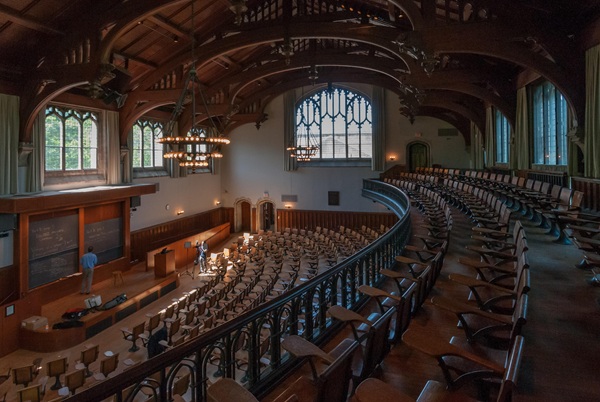
    Photo from the balcony of a large lecture hall filled with wooden seats. Sunlight filters in through high windows.
    McCosh 50, the largest lecture hall on campus, where International Politics is held. Source
  3. Poverty, by America (Departments: Sociology and African American Studies): 

    I still remember reading Evicted on a sunny afternoon during a summer in junior high and the impression it left on me of the challenges of facing housing insecurity. I was impressed to discover that the author, Matthew Desmond, had spent a year living among the eight families featured in order to write the book. When a friend told me that she worked with Professor Desmond in the Eviction Lab at Princeton and was taking a class taught by him, I knew it would be among the top on my wishlist.

  4. The Great Russian Novel and Beyond (Department: Slavic Languages and Literatures)

    I love to read (send me an email if you have any book recommendations!). Last fall, I was looking for a literature course to fulfill my remaining literature and the arts distribution requirement and a good friend of mine (who was actually my Community Action orientation leader) recommended this introduction to Russian literature. I enrolled in the course and discovered that it was a hidden gem tucked away among the many interesting literature classes available at Princeton. Professor Chances clearly loves the books, and I was eager to learn about famous and lesser known works of Russian literature in a small class setting. The weekly precept (small group discussion) was led by Professor Chances and only had four students! Unfortunately, I had never read any of the books before so I was having trouble keeping up with the reading. I made the difficult decision to drop the course at the end of the second week, known as add/drop or shopping period. I was able to borrow the books for the semester through the University library, so I hope to finish Fathers and Children and read Anna Karenina once classes end.

  5. Beginner’s American Sign Language (Department: Linguistics)

    Princeton began offering for-credit ASL courses in 2018 which could be used to fulfill the foreign language requirement starting in 2021. I would love to learn a language which uses a completely different part of my brain, gain a better understanding of deaf culture, and think about how we can increase accessibility for individuals who are hard of hearing. Former blogger Naomi wrote a wonderful post about learning ASL three years ago which makes me want to at least shop ASL101 in the fall.

  6. Princeton University Steel Band (Department: Music)

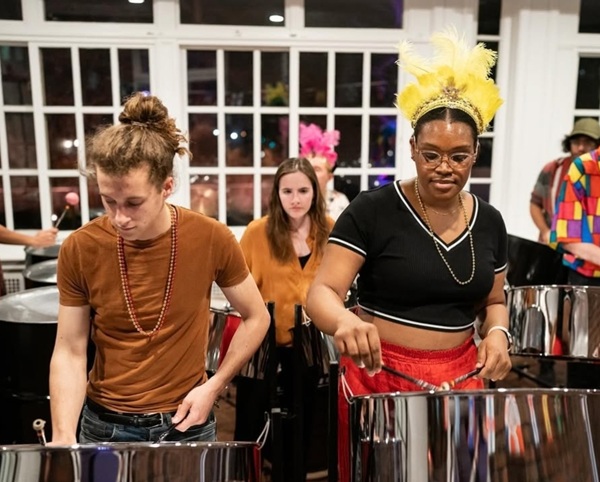
    Steel Band is another popular course in which students learn how to play the steelpan, an instrument originating from Trinidad and Tobago with a beautifully resonant sound. The course is P/D/F only, which means students receive a “pass”, “D”, or “fail” for the course, removing the stress of receiving a good grade (read more in Jocelyne’s blog post about P/D/F classes). Almost every review reads, “Take this course!” and one student commented that they’ll be talking about it for many years after Princeton. Although I won’t be able to fit it into my schedule, I plan on attending the class performance at the end of April which will also feature the student steelpan ensemble TigerChunes, led by one of my friends!

    3 students playing the steelpan
    TigerChunes at work! Photo credit: Aleigha Reynolds
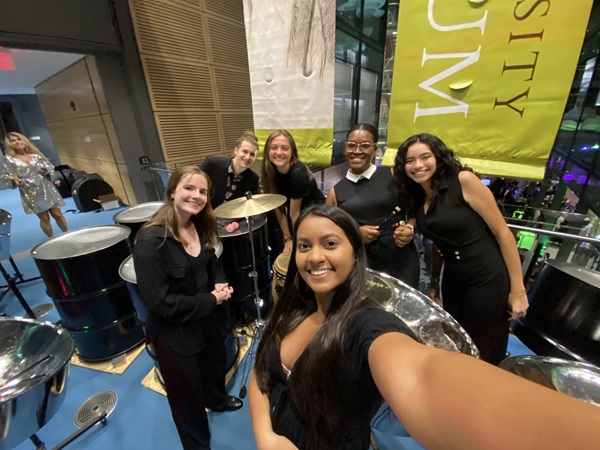
    A selfie of six students with a steelpan and other drums
    Photo credit: Aleigha Reynolds
  7. Practical Ethics (Departments: Center for Human Values and Philosophy)

    Last but not least, I wish I could have taken Practical Ethics, which discusses topics ranging from abortion to the ethics of what we eat, and actually made my Outdoor Action co-leader become vegetarian. Taught by Professor Peter Singer, author of a number of fascinating books including Animal Liberation and The Life You Can Save, students praised the application of different ethical theories to real-world issues and Professor Singer as an “excellent lecturer, speaker, and arguer.” Unfortunately, the course is no longer offered following Professor Singer’s retirement in 2023, but I hope he will return to give an occasional lecture!

    Honorable mentions include: 

  8. Analog Photography, or any course in the Visual Arts department
  9. The Glass Class, a freshman seminar on the science and art of glass which travels to Venice over the break!

Clearly, I could go on. Princeton offers a wide array of unique courses which stretch students in different ways, whether by learning a new language on campus or abroad, engaging with community members and organizations, or simply discussing topics and authors you had never heard of before. As my time at Princeton comes to a close next semester, I am grateful to have had access to scholars, professors, and students who continue to stimulate my intellectual curiosity and teach me something new every day.


How My Creative Writing Poetry Class Got Rid of My Seasonal Depression


Last semester, in the depths of the grey and dark December nights, I was seasonally depressed. Even when I first returned to campus, the winds still had a frosty bite, the days were still short. Fortunately, the fates were on my side when I clicked the class registration button and I finally made it into the creative writing poetry class, and it has been my favorite class since.

Contrary to a lot of Princeton classes, the creative writing department has almost all pass/fail classes, taking the pressure off stressful performances or assignments. After my brief encounter during my freshman writing seminar, New South (home to the Creative Writing department) became a safe space to write straight from the heart, express all my emotions, and learn from my peers and professors’ suggestions through poetry readings and workshops each week.

For me, the highs are really high, and the lows are really low in the Orange Bubble. I used to feel trapped when I hit those plateaued days with no place to escape, but now I just pick up the pen and write. When I am stuck in office hours with an unsolvable bug in my computer science Java program, drenched in the freezing rain after a dreary midterm, covered in smoke after an unsuccessful pad thai cooking session, or just generally sad when the sun crept into the night before classes even ended, I just let the feelings wash over me and wield them into prose, bit by bit. Somehow, the freewriting, proofreading, changing out specific vocabulary only added to my catharsis each time I create a new poem.

I used to have a lot of trouble putting my thoughts onto the page, judging them to be never original or poetic enough. However, being assigned to write each week in a completely freestyle manner, guided only by a general prompt, has allowed me to trust and push myself into opening up. I've also healed my grievances as I see others in the class relating to them. After class, I stay perched in the sixth floor classroom, entranced with the peaceful quiet of the room as the sky gradually dims.

Now, I can’t believe I went through Princeton without ever writing poetry, which marrows all the angsts in my mind and evaporates them as soon as I let them out. Even now, when I am writing this blog, I hope this will be an inspiration for you to find your own outlet: going to the gym, listening to music, or writing a poem, like me. I would like to share one of my poems with you, which summarizes how I feel about my poetry class overall.


Never have I ever             

                           
“Never have I ever
Looked at art in the museum and
Understood what it truly meant.”

Never have I ever
Wished I could be 
Someone else’s             muse

Never have I ever
Gotten used to being perceived
Beyond the confines of my own frame

Never have I ever 
Been certain that I belonged
In a room crammed with gazes, voices

Never have I ever
Not wondered if they 
Meant to hold or hurt             or both

Never have I ever
Been able to tune out
The deep, dark nagging

Never have I ever
    Had the confidence to believe
        I was created for an original purpose

Never have I 
Ever been brave enough
To lay my vulnerabilities on canvas

One down. 


Stained-Glass Windows... in a College Dorm Room?


Princeton’s architecture is extraordinary. After moving in and getting settled here, I had a hard time fully grasping that I was going to be surrounded by breathtaking collegiate gothic architecture 24/7, especially as a member of Rockefeller College, or Rocky. I had to get used to walking under the arches by Holder Hall anytime I went to the dining hall, giving a shout-out to Blair Arch as I made my way to my Writing Seminar, and greeting Benjamin Franklin and Joseph Henry when entering Frist Campus Center. These are some of the most iconic and picturesque parts of campus, and now they are just a hop, skip, and a jump away from me — and I am extremely grateful to get to see them all the time!


However, one architectural feature that really took some getting used to was having stained-glass windows in my dorm room. Before coming to Princeton, if I ever heard someone say, “Stained-glass windows,” a college dorm room was never the first thing that came to mind. Nonetheless, for the amount of surprise I felt toward having such gorgeous windows in my new little home, there was just as much thrill.


Stained glass window
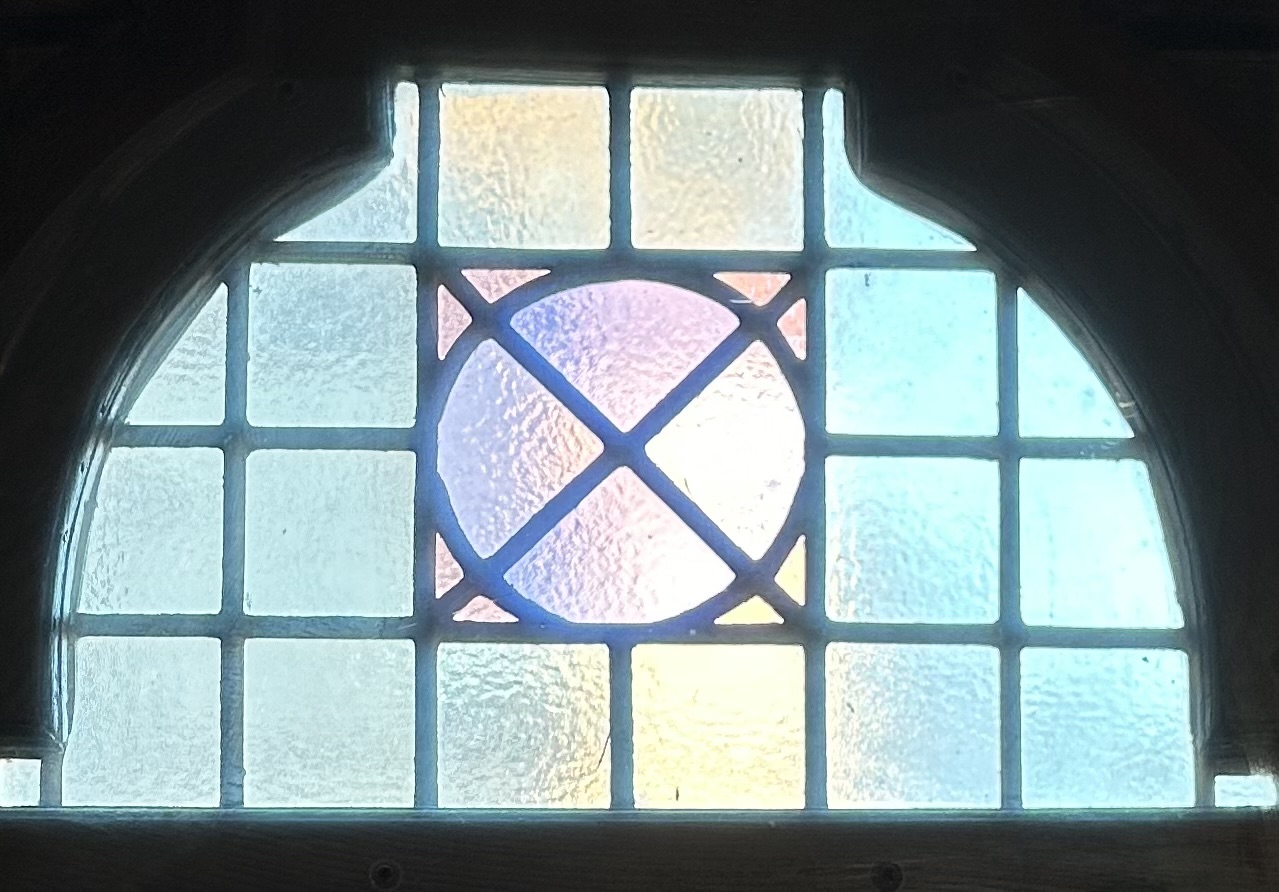
One of the stained-glass windows in the late afternoon


Every now and then, in the early morning and late afternoon, right when there is just enough sunlight to seep through the small glass panels, I find myself just sitting and admiring the windows. Blending with colors of other things behind them, like clouds and nearby buildings, the panels transform into an array of hues, with some of the aquamarine squares projecting shades of yellow and green and the blue circle in the middle reflecting an ombré of violets and pinks. Anytime I see the windows in this state of beautiful transition, I feel like I have to pause and remind myself I am in a college dorm room.


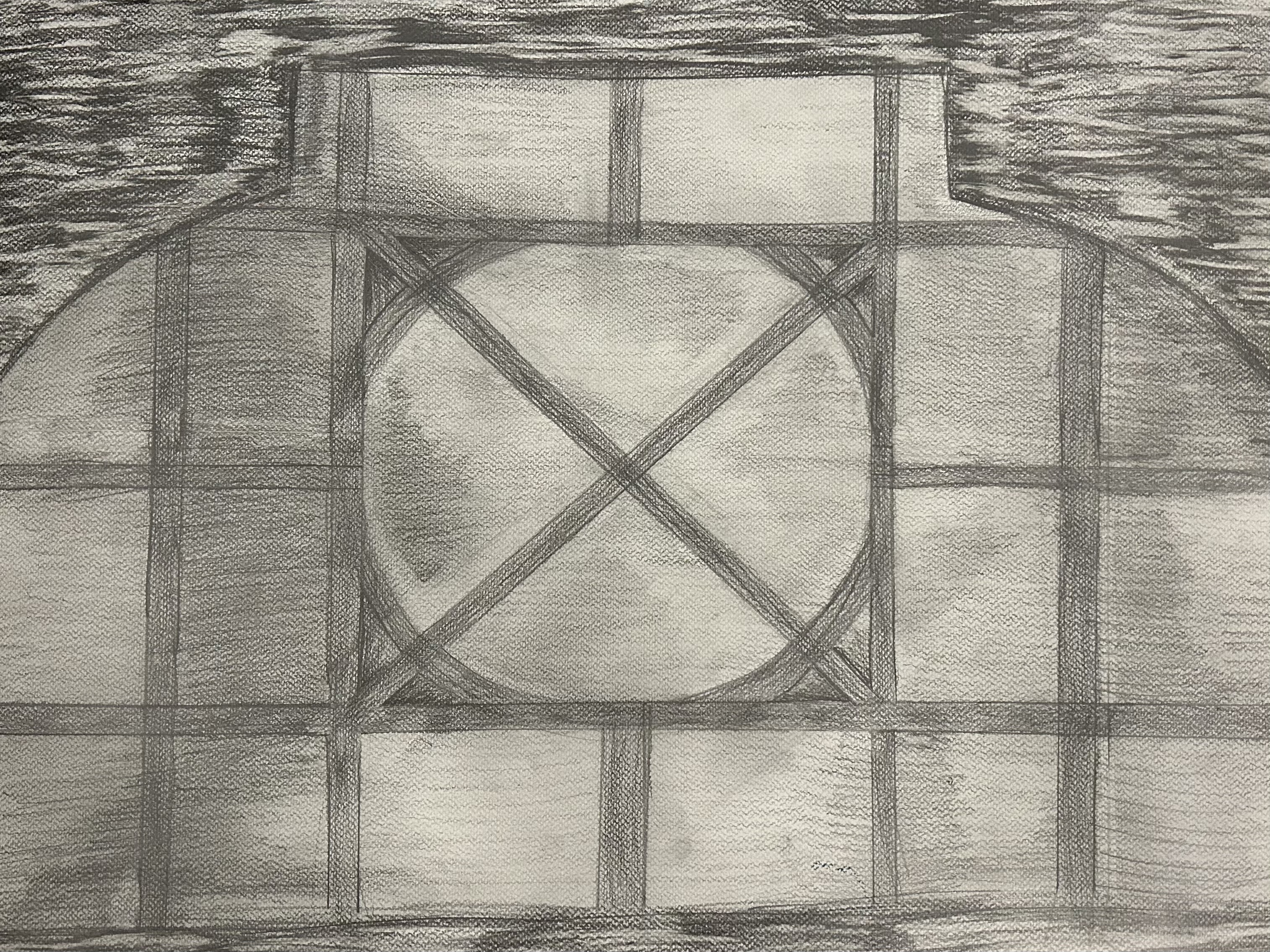
Because I admire these windows so much, for a project in my drawing class this past semester, I decided to draw one. Getting the lines and proportions correct was definitely tough, but the part I enjoyed the most was filling in all the panels with their complex aspects. As I made each mark and sketch, I became more aware of how truly detailed the windows are, as beams of sunlight and outside objects enable them to present a unique variation of colors. I hope my drawing was able to do the windows some justice! 


Sketch of a stained glass window
My drawing of one of the windows


All this talk about windows is to encourage you to never overlook the little things in life — and to show you how BEAUTIFUL Princeton is ;). The “out-of-the-ordinary” are oftentimes sources of genuine beauty, like holding the door open for a stranger, reaching out to a friend you have not spoken to in a while, or appreciating a stained-glass window in a college dorm room. Never take for granted the power of random demonstrations of beauty and goodness — they are more powerful than we know! 


Sketching a New Perspective: Finding Balance in Art Class


For as long as I can remember, I’ve loved to draw. Whether it was doodling in the margins of my notebooks or sketching landscapes from trips I wanted to remember, art has always been a quiet presence in my life. But despite my enthusiasm, I never had the opportunity to formally learn how to draw—not in the way I wanted to. Technique, composition, the interplay of light and shadow… those were things I admired in other artists’ work but never quite knew how to achieve myself.

That changed when I enrolled in Drawing I.

As an engineering student, my days are usually filled with equations, simulations, and technical problem-solving. My mind is constantly working through numbers and constraints, optimizing, analyzing. But stepping into the Drawing I studio feels like entering another world—one where precision gives way to intuition, where mistakes are embraced, and where time slows down just enough to notice the way light falls on a crumpled piece of fabric.


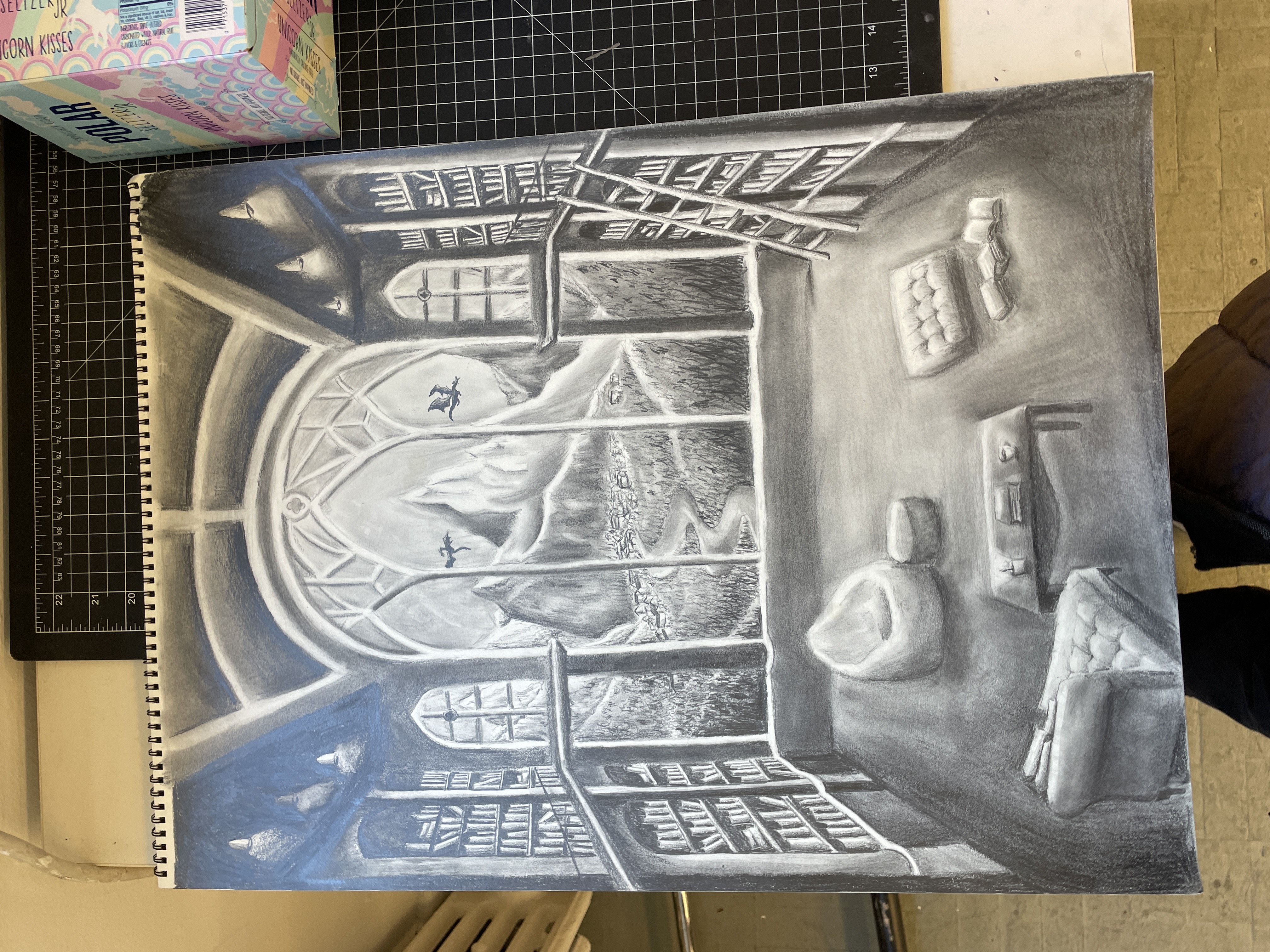
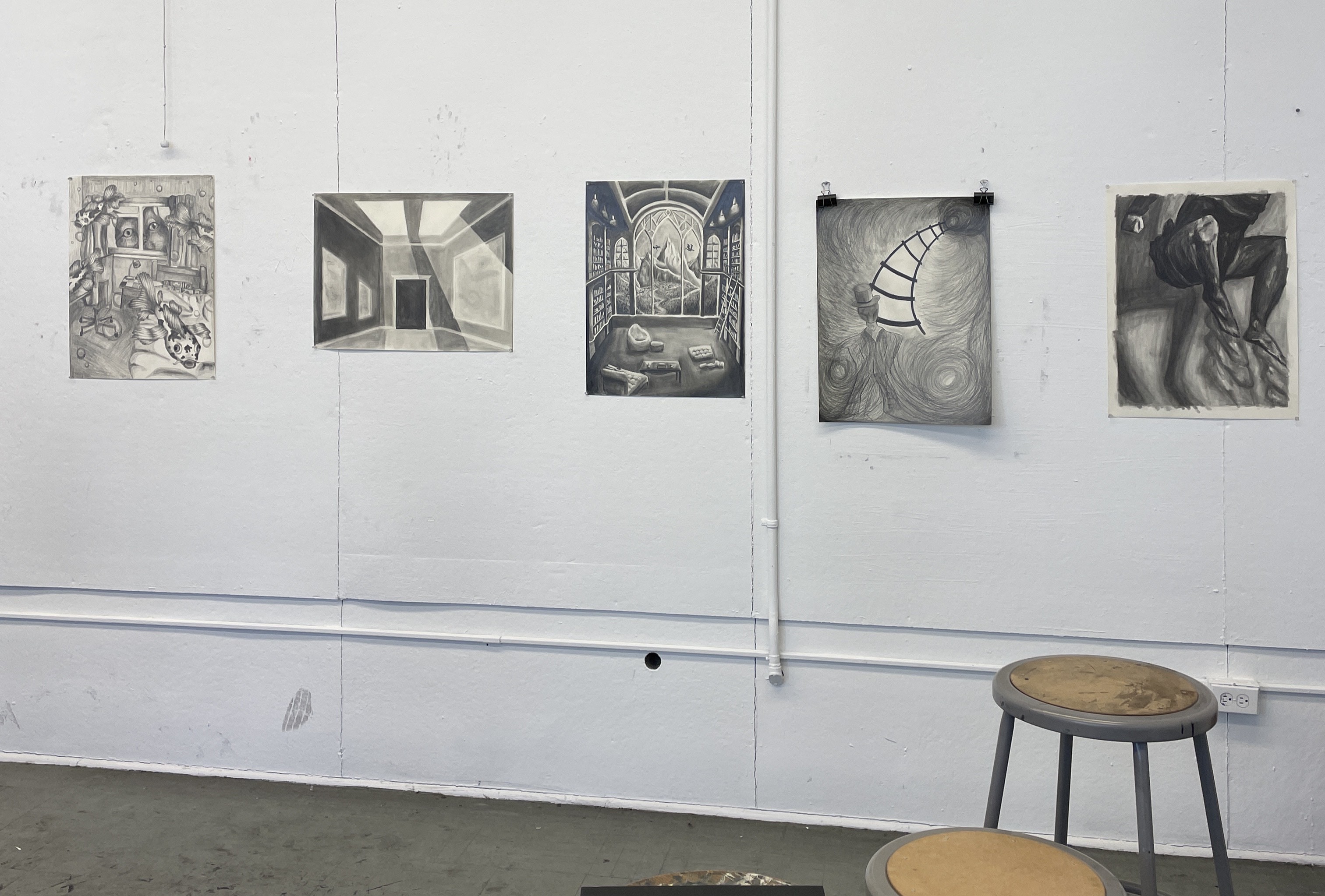
Drawing of a gothic library with windows overlooking a fantastical mountain scape


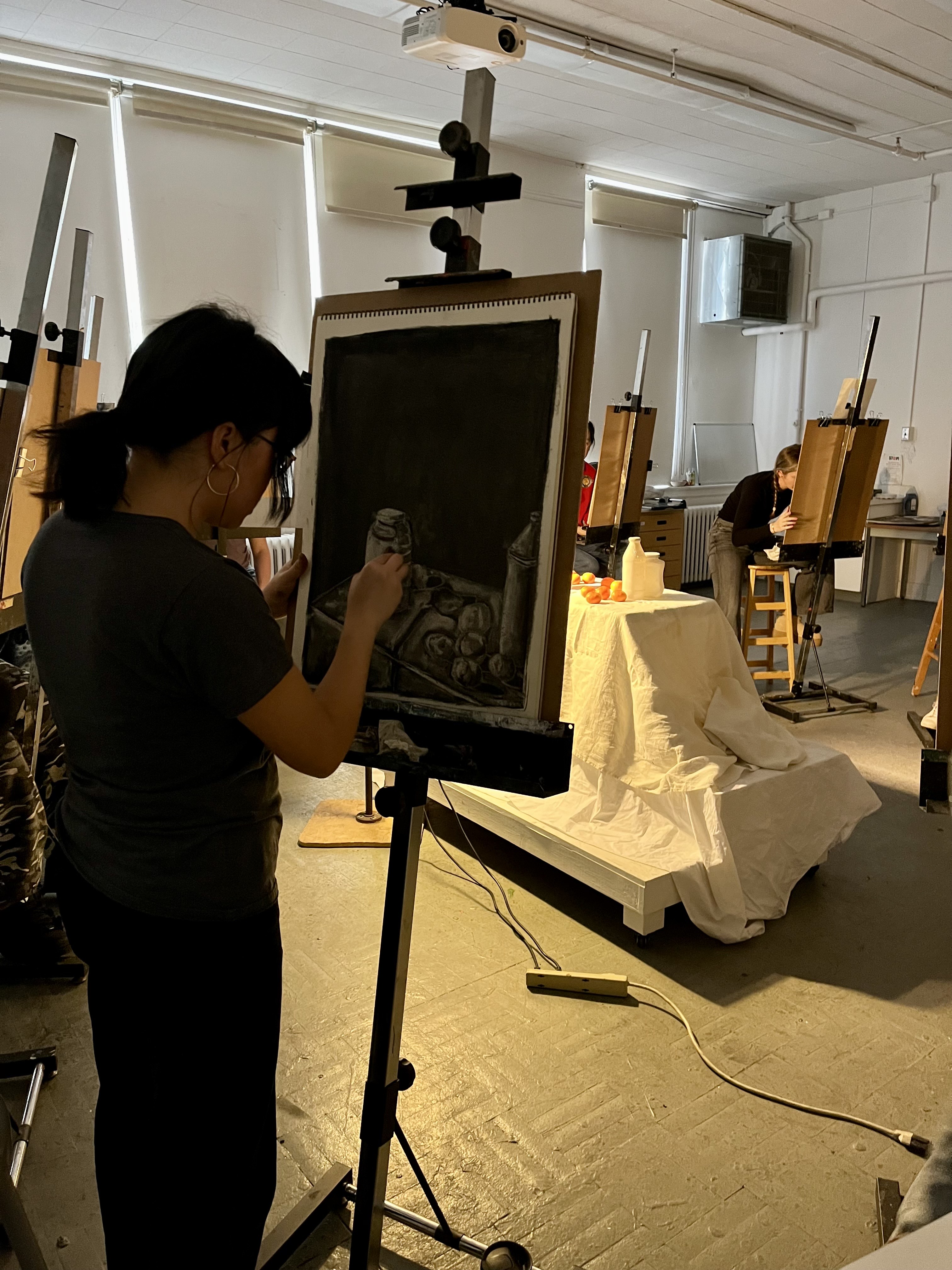
One of the most rewarding aspects of the class has been learning actual techniques—things I never knew I was missing. I’ve experimented with charcoal, ink washes, and different ways of mark-making that have completely changed how I approach a blank page. Still lifes, in particular, have been a revelation. Before, I might have seen a collection of objects on a table and simply tried to copy what I saw. Now, I look for depth, contrast, texture. I see how negative space shapes the composition, how a single bold stroke of charcoal can bring a drawing to life.


Student stands drawing at an easel


Another unexpected joy has been learning from my peers. Each critique session is like seeing the world through a dozen different perspectives. Someone’s expressive linework, another’s delicate shading—there’s always something to absorb, something to inspire. It’s a reminder that art isn’t just about improving in isolation; it’s about conversation, observation, and growth.


Exhibition of student works


And then there’s the sketchbook.

At the beginning of the semester, we were all given our own sketchbooks—blank, waiting, full of possibility. I’ll admit, at first, I hesitated to put pencil to paper. But soon, it became a space for pure experimentation. Quick gesture drawings, abstract shapes, studies of hands and faces. Some pages are careful and intentional; others are chaotic and filled with half-formed ideas. But that’s the beauty of it. There’s no pressure for perfection, only the freedom to explore.

In many ways, this class has given me something I didn’t even know I needed. It’s not just a break from engineering—it’s a way to engage with creativity in a deeper, more meaningful way. It’s a reminder that, even amid the busiest weeks, there’s always space to step back, observe, and create.

And maybe, just maybe, I’ll carry a little bit of that mindset with me beyond the studio—into my engineering work, my problem-solving, and the way I see the world.


Beyond the Orange Bubble: Exploring Opportunities Off-Campus


Princeton is often collectively referred to as the Orange Bubble — a colloquial term for the cozy, safe, and tiny Princeton neighborhood. Our campus is not always as bustling as our neighboring schools in the city, and although I always feel quite fond of our homey Orange Bubble, sometimes, the Princeton community can feel too small. We, as students, tend to frequent the same local businesses and sites until we've exhausted them; we often see the same people. Thus, our little community can sometime feel a bit stifling — especially in the middle of high-stakes semesters. However, the thing that no one really tells you is that there is indeed a world beyond the Orange Bubble. And that world is always available to you.

Over the last two academic years, I've devoted myself to exploring opportunities outside the Orange Bubble. This was apparent last fall when my friends and I visited Drexel University in Philadelphia for their annual "Nollywood" party. This party celebrates Nigerian cultural heritage and brings together Nigerian students from schools across the tri-state area. This was one of my first times attending a social event outside of the Princeton ecosystem. I got to visit my cousins who attend Drexel and even made new Nigerian friends who were enthusiastic about collaborating with Princeton's many affinity groups. It reminded me that my community is not just limited to Princeton — there are so many nearby academic institutions and like-minded students at my fingertips.

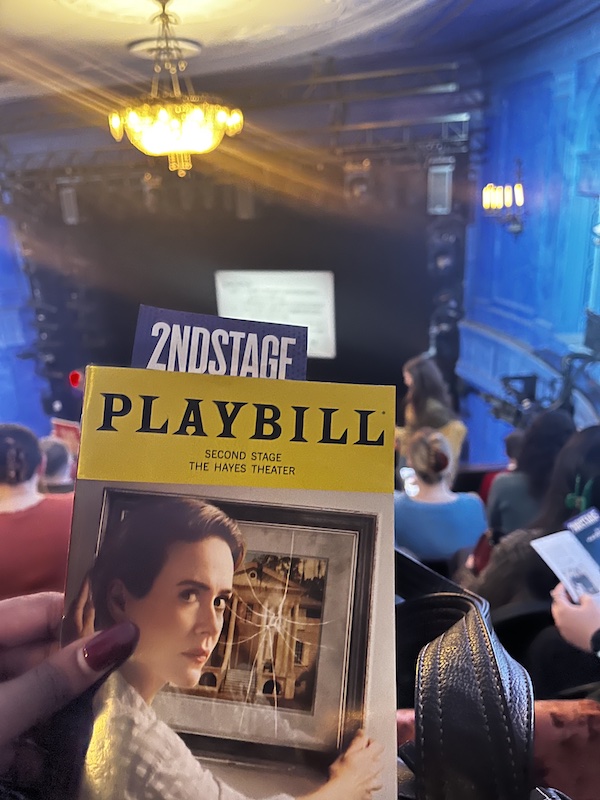
In addition to visiting other local universities, I often enjoy trips to New York City to see art shows. The Lewis Center for the Arts — Princeton's center for most arts-related academics — frequently provides a bounty of free opportunities to see theatrical performances in the city. This has always been highly beneficial to me, given that theater is one of my greatest passions at Princeton. Most excitingly, I saw a preview show of Princeton alum Brandon Jacob-Jenkins's play Appropriate last winter. One of my professors designed the show's lighting and was thrilled to host us in the city. It was a truly amazing night of theater. Sitting with my theater friends, watching a work made by someone once in our shoes, was a surreal experience.


Image
A playbill of the Broadway play Appropriate
My playbill from Appropriate!


Image
Three students posing for a selfie, holding snacks
My theater friends and I grabbing a late meal snack after the show!


Most recently, Princeton's Office of Undergraduate Research helped fund an opportunity for my friends and me to attend Howard University's 2025 African Indigenous Knowledge and Languages International Conference. This was a conference my peers and I had longed to attend, given our academic interests in African Studies and indigenous African languages. Howard University is known as a large hub for this kind of research, so participating in this event was a dream come true. After a three-hour Amtrak ride, we found ourselves in the middle of D.C., forming unforgettable memories. Since D.C. is my hometown, I could take my friends to some of the sites and spaces I adored as a child. I also visited local family and friends — which provided a nice break from the mid-semester stress — while engaging in stimulating conversations during the various panels I attended at Howard. At the end of that weekend, I found myself full of gratitude for the opportunities Princeton provides for me to navigate my academic interests beyond the boundaries of our campus. I also felt immensely grateful to be able to share my hometown with my beloved Princeton friends.


Image
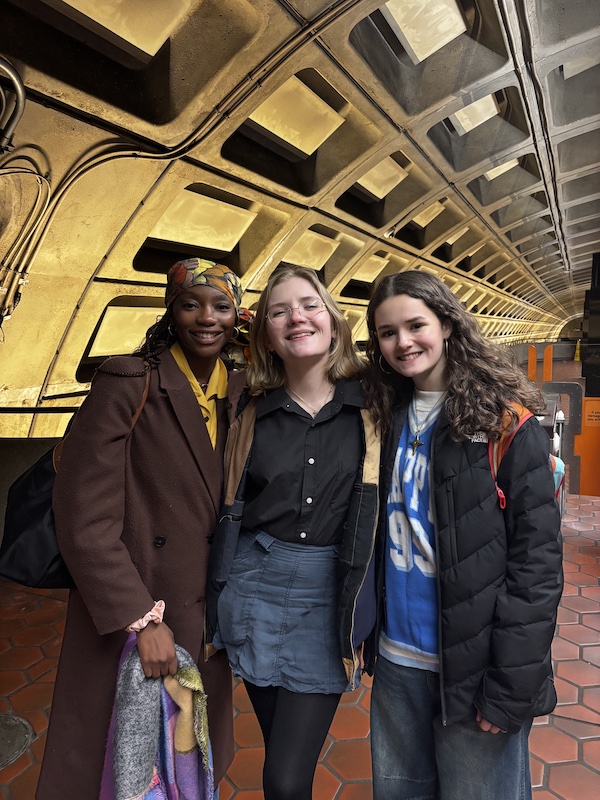
Three girls posing for a picture at a metro station
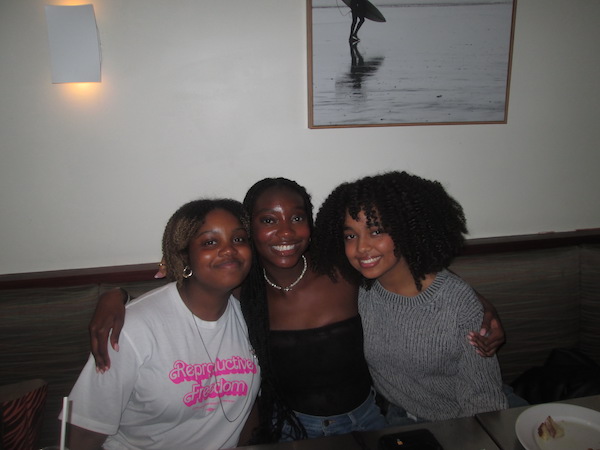
Some of my hometown friends and I reuniting at a metro station in D.C.


Princeton can feel small, but the world outside of it is big and the university offers many opportunities for students to explore the big world beyond our campus. I look forward to continuing to take advantage of these opportunities as I pursue my studies.